There isn't one right answer to "how do I get rid of junk" — it depends on what the item is, how much of it there is, and how much of your own time and effort you want to spend. Below are the five real options people actually use, roughly ordered from least to most effort on your end, so you can find the one that fits before you commit a whole Saturday to it.
Key Takeaways
- If an item still works, sell it or donate it first — it has value to someone else, and it's the most eco-friendly option available.
- Free local groups (Freecycle, Nextdoor, Buy Nothing) are often the fastest way to move something you no longer want, at zero cost.
- Municipal bulk pickup and transfer stations are cheap or free, but come with item limits, scheduling, and your own labor to get it there.
- Dumpster bags split the difference — you load at your own pace, but someone else hauls it away.
- Once you're dealing with heavy items, a large volume, or a deadline, full-service junk removal is almost always the better trade of money for time and effort.
Quick Answer: Which Option Fits You?
| Your Situation | Best Option |
|---|---|
| Furniture or appliances that still work | Sell or donate them first |
| Just a few small-to-medium items | Municipal bulk pickup, or a quick trip to the transfer station |
| A driveway's worth of stuff, no rush | A dumpster bag you fill over a few days |
| Heavy items, a whole room, or a deadline | Full-service junk removal |
1. Sell Usable Items
If something still works and is in reasonably good shape, selling it is the best outcome for everyone — you get some money back, and it stays in use instead of heading to a landfill.
- Furniture and general items: Facebook Marketplace and OfferUp are the easiest starting points for local, no-shipping sales — list it, meet the buyer, done.
- Clothing: Apps like Poshmark and Mercari are built specifically for secondhand clothing and tend to reach a more targeted buyer than a general marketplace.
- Electronics: Swappa and eBay are better fits for phones, laptops, and other electronics, where buyers expect detailed specs and condition photos.
The tradeoff is time: photographing, listing, and coordinating a pickup or shipment takes real effort, and it only works for items someone actually wants to buy.
2. Donate or Give It Away
For items that are usable but not worth the hassle of selling, donating is the next-best option — it's fast, it's free, and it keeps good items out of the waste stream.
- Charities: Goodwill, the Salvation Army, and Habitat for Humanity ReStores all accept good-condition clothing, housewares, and furniture. Several of these organizations offer free pickup for larger items, so it's worth calling ahead instead of assuming you have to drop it off yourself.
- Free local groups: Posting an item on Freecycle, Nextdoor, or a local "Buy Nothing" Facebook group is often the single fastest way to get rid of something — neighbors frequently claim items within hours and come pick them up themselves.
If an item still works, selling or donating it is almost always the better move — both for your wallet and for the environment.
3. Municipal Bulk Pickup or Self-Hauling
For items that aren't sellable or donatable, check what your city or county already offers before paying for anything.
- City or county bulk pickup: Most local public works or solid waste departments offer scheduled bulk collection or large-item pickup, often for free or a small fee, within certain item limits. Gwinnett County residents, for example, get two free bulk items per week through their assigned hauler — see our complete junk removal guide for the full rundown of how that program works and where it falls short.
- Transfer station or landfill: If you've got a vehicle that can handle it, loading up non-hazardous waste and taking it directly to your county's solid waste facility or transfer station is typically the cheapest self-service option, usually for a modest per-load fee.
This route asks the most of your own time and labor — you're doing all the lifting, loading, and driving yourself, on the facility's schedule rather than yours.
4. Dumpster Bags
A dumpster bag (the best-known brand is Bagster) is a middle-ground option: you buy a heavy-duty disposal bag, unfold it in your driveway or yard, fill it at your own pace over several days, and then schedule a pickup service to come haul it away.
It's a reasonable fit if you have a moderate amount of debris, don't need it gone today, and would rather not deal with a rented dumpster taking up space for a week. The catch is that you're still doing all the lifting and loading yourself, and most bags have a weight limit that's easy to hit with anything heavy, like construction debris or old furniture.
5. Full-Service Junk Removal
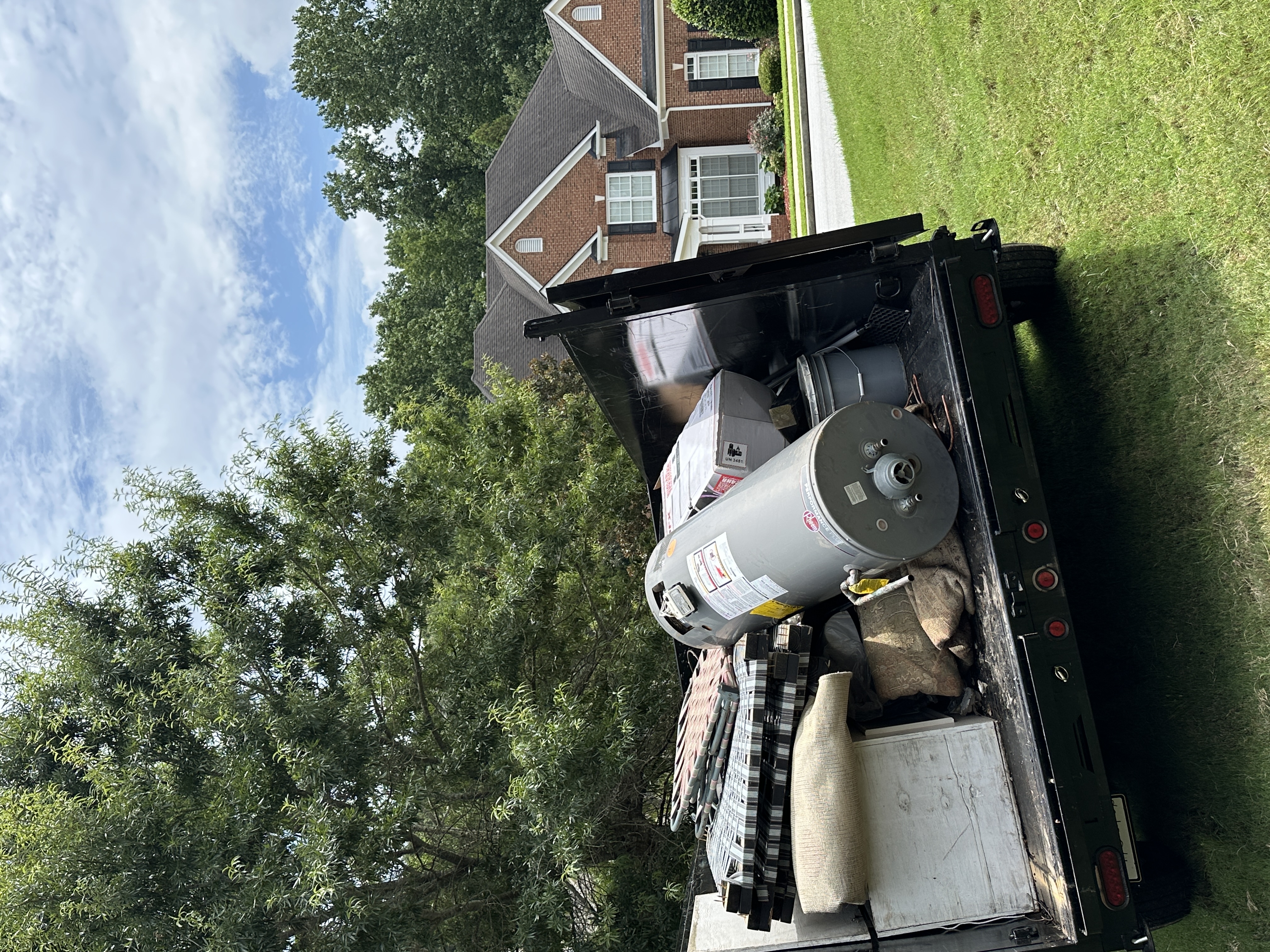
When you're dealing with heavy lifting, a large volume of debris, or simply don't have the time to sort through every option above, a full-service local company is the fastest way to make it disappear. A crew like ours sorts, loads, and hauls everything away in a single visit — you don't move a single item yourself.
This is the right call for whole-room and whole-property cleanouts, anything involving heavy appliances or furniture, and any job where a deadline (a move, a closing, a tenant turnover) makes DIY options too slow. See our full guide to how junk removal works for the step-by-step process, or send us a few photos for a free quote.
How to Decide, in Short
- Furniture or appliances that still work? Sell or give them away first — don't skip straight to hauling.
- Just a few items? Rent a pickup or trailer yourself, or make a quick trip to the local transfer station.
- A driveway's worth, no rush? A dumpster bag lets you fill it at your own pace.
- Heavy, high-volume, or on a deadline? Call a full-service junk removal crew and let someone else do the lifting.
Frequently Asked Questions
What's the cheapest way to get rid of junk?
Giving items away through a free local group like Freecycle, Nextdoor, or a Buy Nothing group costs nothing and is often the fastest way to move something you no longer want. Municipal bulk pickup is the cheapest option for larger household items, since most residents get a couple of free pickups built into their trash service.
What should I do with furniture or appliances that still work?
Sell or donate them before anything else. Working items have real value to someone else, and donating to a charity like Goodwill, the Salvation Army, or a Habitat for Humanity ReStore keeps usable goods out of the landfill and can qualify for a tax receipt.
When does it make sense to hire a junk removal company instead of doing it myself?
When items are too heavy to lift safely, there's more volume than fits a personal vehicle or a dumpster bag, you're working against a deadline, or the job spans multiple rooms. At that point, the time and effort a professional crew saves you is usually worth more than what you'd save doing it yourself.
Landed on "hire it out"? We handle everything from a single item to a full property cleanout, across Gwinnett County.
Get a Free Quote Call or Text 470-822-9531