
Whether it's a weekend DIY project or a full room remodel, home improvement work almost always generates more debris than people expect going in. The new cabinets, flooring, or deck get all the attention during planning, but the old cabinets, flooring, and deck still have to go somewhere once the project wraps. Below is a realistic look at what each common project leaves behind, and what actually happens to it afterward.
Key Takeaways
- Almost every home improvement project generates more debris than the original plan accounts for.
- Heavy materials like tile, countertops, and flooring are deceptively dense — small piles weigh more than they look.
- Paint, solvents, and other chemicals need separate, proper disposal and can't go in a standard haul-away load.
- Fixtures and cabinets still in good condition are worth setting aside for donation before anything gets hauled.
Kitchen Remodels
Kitchens produce the biggest debris pile of almost any home project. Old cabinets, countertops, a range or dishwasher coming out, flooring underneath it all, and the backsplash tile add up fast, and it's rarely just one trip to the curb. Countertops in particular are heavier than they look — a single section of granite or quartz can take two people to move safely. If the cabinets or appliances are still functional, they're often worth setting aside for a reuse center like Habitat for Humanity's ReStore before anything else gets hauled.
Bathroom Remodels
Smaller footprint than a kitchen, but no less awkward to deal with. A pulled vanity, an old tub or shower surround, torn-out tile, and a toilet all need to come out, and most of it is heavy, oddly shaped, or both. Tile demo in particular produces a surprising amount of weight for a small room — a full bathroom floor and shower surround can easily fill several contractor bags of broken tile and thinset.
Flooring Replacement
Old carpet and padding roll up fairly easily, but tack strips, staples, and underlayment often get left behind in the rush to get new flooring down. Hardwood and tile are a different story — both are dense, and a mid-sized room's worth of torn-out tile can weigh several hundred pounds once it's broken up and bagged.
Small piles of tile or countertop material weigh far more than they look like they should — plan for that when you're estimating how much is actually coming out of a room.
Painting & Drywall Projects
Drywall patches, sanding dust, and torn-out sections of wall or ceiling are routine debris from this kind of work, and we handle that the same way we handle other construction debris. Leftover paint and solvents are a different category entirely — those need to go through proper hazardous waste disposal rather than a standard haul-away. Our guide to items we commonly cannot haul covers paint and other materials that need special handling, and Gwinnett County runs periodic household hazardous waste collection events for exactly this kind of leftover.
Deck & Fence Projects
Old decking boards, posts (sometimes still set in concrete footings), railings, and all the hardware that held it together need to come out before a new one goes in. This is one of the heavier outdoor dismantling jobs, similar in scale to fence removal or deck removal on their own, and it's worth factoring the teardown into your project timeline rather than treating it as an afterthought.
Basement & Attic Finishing
Finishing an unfinished space often starts by clearing out whatever's been stored there for years — which is its own project before the actual construction debris even starts. Old insulation, subfloor material, and framing offcuts pile up fast in a confined space. If you're starting from a storage situation rather than a blank slate, our basement cleanout and attic cleanout pages cover that first step specifically.
Landscaping & Yard Projects
Regrading a yard, replacing sod, pulling out overgrown shrubs, or tearing out old pavers and retaining walls generates a mix of organic yard waste and heavier material like soil, rock, and broken concrete. These often need to be separated and handled differently — see our yard waste removal page for the organic side of the job.
Window & Door Replacement
Old window and door units come with frames, trim, and sometimes broken glass, which makes safe handling as important as hauling capacity. A handful of old windows doesn't look like much, but frames and trim add up over a whole-house replacement, and glass needs to be handled carefully regardless of volume.
Junk Removal vs. a Dumpster for a Renovation
For a project that wraps in a day or two, a single haul-away pickup is usually simpler than coordinating a dumpster delivery and pickup. For a multi-week renovation where debris builds up gradually, a dumpster parked on-site for the duration can make more sense. We cover the tradeoffs in more detail in Junk Removal vs. Dumpster Rental: What's the Difference? if you're trying to decide which fits your specific project.
What We Do With It
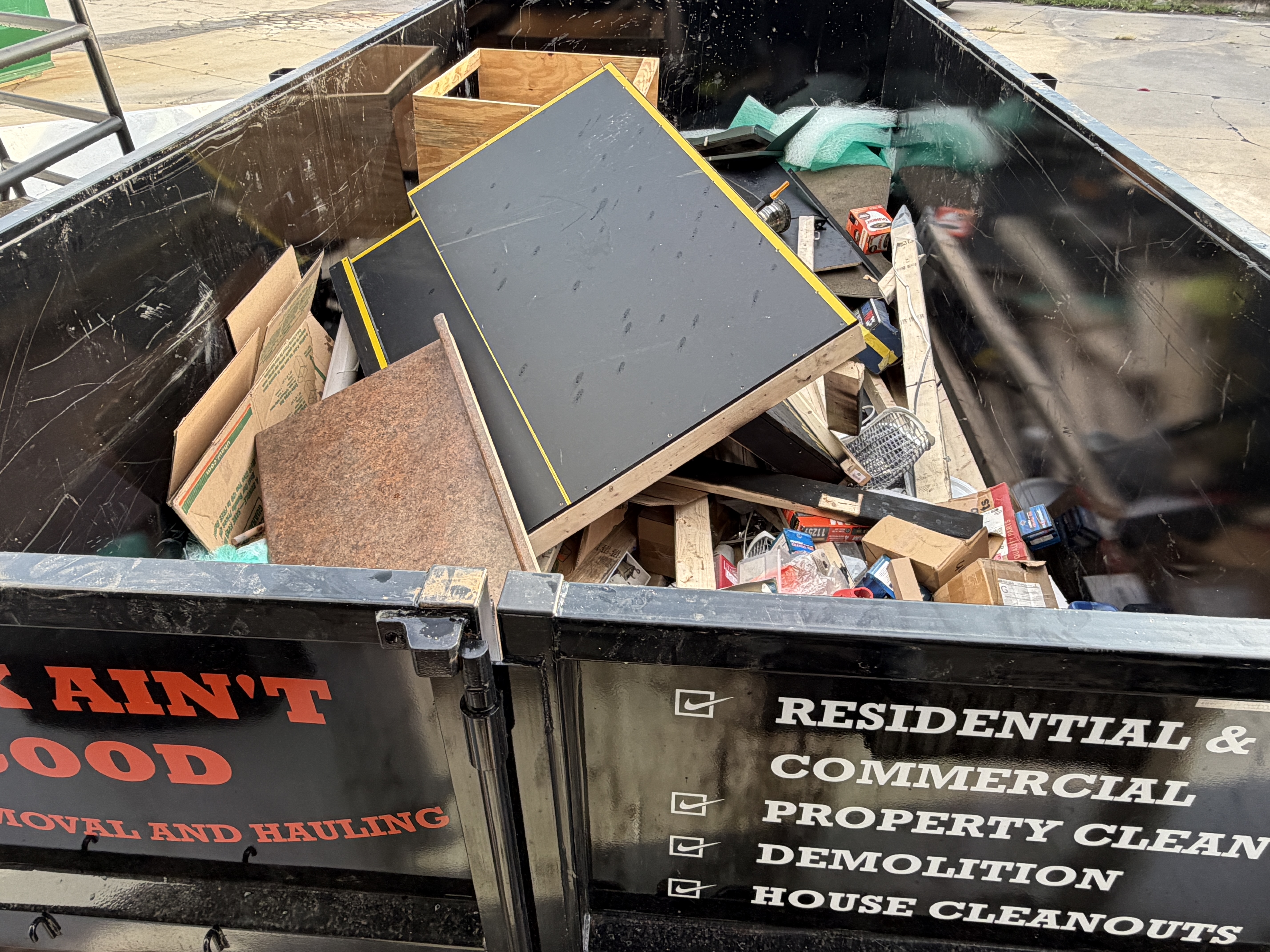
As we load a renovation haul, we sort it the same way we sort every job: cabinets, fixtures, and appliances still in usable condition get set aside for donation whenever possible, following our donation-first approach. Scrap metal from old appliances and fixtures gets recycled, and the rest is disposed of responsibly rather than left for you to figure out.
Common Mistakes That Slow a Project Down
A few things reliably create problems: piling debris curbside before confirming your city or HOA allows it, mixing paint cans or chemicals into a pile meant for standard haul-away, and underestimating how heavy tile, countertop material, and flooring actually are once it's out of the room. Planning the debris removal as its own step — not an afterthought squeezed in after the dumpster's already gone — keeps most projects moving on schedule.
When to Call for Pickup
Some homeowners schedule a mid-project pickup to clear space before the next phase starts, which is especially useful for kitchens and bathrooms where the old materials need to be fully out before new ones go in. Others wait until the whole project is finished and haul everything at once. Either approach works — send us a photo of what needs to go and we'll give you a free, upfront quote, with same-day and next-day appointments available in most areas whenever our schedule allows.
Frequently Asked Questions
Do you haul away construction and renovation debris?
Yes. We regularly haul drywall, flooring, cabinets, countertops, lumber, and general renovation debris for homeowners and contractors throughout Gwinnett County.
Can you pick up debris in the middle of a project, or only at the end?
Either one. Some homeowners schedule a pickup partway through to clear space for the next phase, and others wait until the whole project wraps. Same-day and next-day appointments are available in most areas.
Do you take old cabinets, countertops, and fixtures?
Yes. Old cabinets, countertops, vanities, tubs, and similar fixtures are some of the most common items we haul from remodels. If a piece is still in good shape, we'll flag it for donation instead of disposal whenever possible.
What about paint, chemicals, and other hazardous materials?
We can't haul paint, solvents, and other hazardous or regulated materials. Gwinnett County runs household hazardous waste collection events for exactly this kind of material, so it's worth setting those items aside separately before we arrive.
Got a project leaving junk behind? We handle renovation and home improvement debris across Gwinnett County every week, mid-project or once you're done.
Get an Online Quote Call or Text 470-822-9531